Are companies using your geolocation to target you?

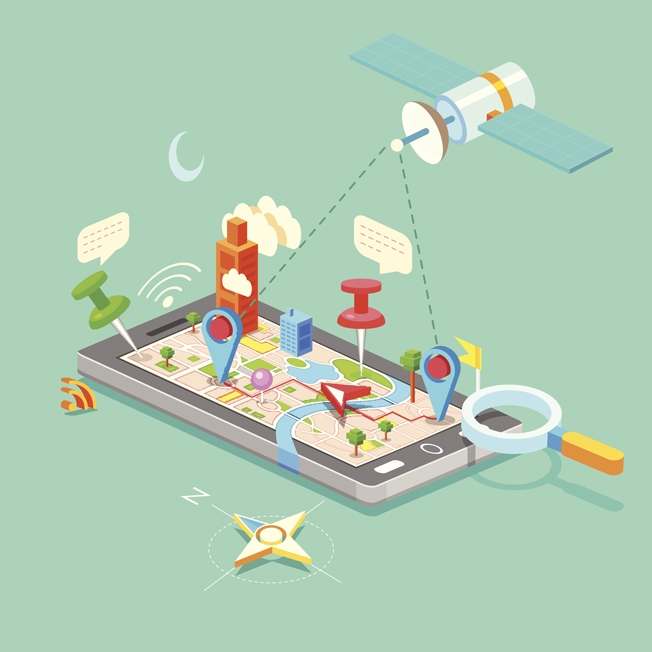
Geo-tracking is defined as identifying a person’s current, physical location by obtaining GPS data from their smartphones or other GPS-enabled devices.

NMPi

So, did you know every step we take is being collected by companies through our smartphones. This is referred to as geo-targeted mobile marketing, which is a new and upcoming form of advertising. Although, it is very controversial as it can be seen as invasive.

Data Collection: Waking up

As soon as you wake-up the GSP and wifi-chip in your smartphone is sending a signal to the nearest cellular data tower. Data marketing firms know how long you were sleeping and where you live, this gives the firms an idea of your income level. They also know what apps are on our phones and which ones we recently used. This allows the companies to target us with good and services based on our interests and income level.

Data Collection: Going to Work or School

Once, you leave your homes your device is broadcasting your locations. As you walk to the tram stop and you pass McDonalds your phones sends a signal to their Wi-Fi network and it recognises that you’re nearby. McDonalds can then send you a coupon offering a discount espresso.

At the same time, a competitor such as Burger King might use geofencing (virtual geographic boundaries) to send you an ad for its coffee instead and point you in the direction of the closest store. This technique is called geo-conquesting.

Data Collection: After Work or School

After your long day you may go to a bar or restaurant with your friends and you use an app to split the bill. The app will then sync your payment data and keep credit card numbers on file, in conjunction with your other purchasing habits. Now, not only can companies see where you spend your money, but also who with. This information helps companies target ads to the correct consumers.

Although this form of tracking is very useful for companies it has raised privacy concerns. European regulators have begun to enforce rules and boundaries in regards to how much personal data companies can draw from the public.

Therefore, do you think it’s too invasive for companies to be tracking our every move or is it smart in the way that they are able to target certain good and services based on our daily activities?

The successful viral marketing of ‘Old Spice’

Smell like a Man, Man was a television advertising campaign in the Unites States created by ad agency Wieden + Kennedy for Old Spice. The campaign was centred around the theme ‘The Man You Could Smell Like”, and it targeted female viewers (despite being for males) because the company recognised that 60% of women make purchasing decisions for male household members in regards to hygiene products.

The goal of the campaign was to increase body wash sales by 15%, but by May 2010, sales of Old Spice Red Zone Body Wash had increased 60% from the previous year. By July 2010, sales had doubled. Also, according to Visible Measures ‘old spice’ was one of the fastest-growing video campaigns of all time.

So, why was it such an outstanding campaign?

Clear target audience – It was clear that the target audience was males but also females who may buy hygiene products for men.

Concise and short video – The video is short and straight to the point which means it can easily be adapted or repurposed to suit different channels. Creative director at Wieden + Kennedy, said “people don’t generally want to sit through long things”.

Variety of Media channel – Old Spice was released for the first time during the Super Bowl in 2010 which was one of the reasons the video went viral. The video was also distributed among many media channels such as social media (Facebook and Twitter) and Youtube to ensure a high number of target audiences are reached.

Creative marketing strategy – The storyline was entertaining and the marketing message was clear.

In sync marketing team – Creative director at Wieden + Kennedy , Jason Bagley states”Obviously we got the scripts and the executions approved by [Old Spice] ahead of time, but when it comes to the Youtube video, there [wasn’t] time for an approval process”. “With that, we just [had] a whole lot of mutual trust.” Therefore, Old Spice was supposedly able to balance careful monitoring without any confusion.

Engagement with fans – Isaiah Mustafa (former footballer) who played the Old Spice Man in the commercial interacted with fans in the form of questions. Fans were given the opportunity to ask him questions and 180 video responses were created some included a marriage proposal and exchanges from celebrities. This frequent interaction with fans was another reason the advertisement was so successful and it would have created a long lasting reaction that people would remember.

So, what digital marketing campaigns have been memorable to you and what do you think made them so successful?

Google, Bing and Yahoo: SEO success.

“SEO” stands for search engine optimisation, which is “a structured approach used to increase the position of a company or its products in search engine natural or organic results listings for selected keywords or phrases” (Chaffey et al, 2012).

Google, Yahoo and Bing are the three most competitive search engines in the world, constantly competing for more users in the search market. Carrying out 1.2 trillion searches per year.

Link-Assistant

So, what’s their successful SEO marketing strategy?

Google

  • Google is recognised for its regular updates, innovative search algorithms.
  • Google considered click-through rate (CTR) and external links as major factors.
  • Google admires user experience above all other factors, thus if your page is user-friendly it will do well in Google search results. For example, Google launched the mobile-friendly label on mobile search engines results. Underneath the link is a grey label that tells the user whether the website is going to work correctly on their mobile device or not.
  • Google favours websites that have videos, images and other content which is more engaging.
  • Google’s crawlers index frequently-updated sites more often, this involves adding updated web pages into Google search.

Bing

Yahoo!

  • Yahoo does not rank websites based on age, it prefers a website with a sizeable domain age because they associate it with authenticity.
  • Yahoo rewards websites with targeted keywords.
  • In order to have a better ranking, Yahoo place great importance on metadata and meta keywords.
  • Readable URLs which represent the content pages, as opposed to numeric or cryptic URLs.
  • Meaningful cross-links between your links, other related websites and providers of relevant content add value for visitors and can boost your ranking.

In your opinion what search engines are eye-catching and have you noticed anything specific the brand has done to achieve such success?

Are we benefiting from products such as Amazon Alexa?

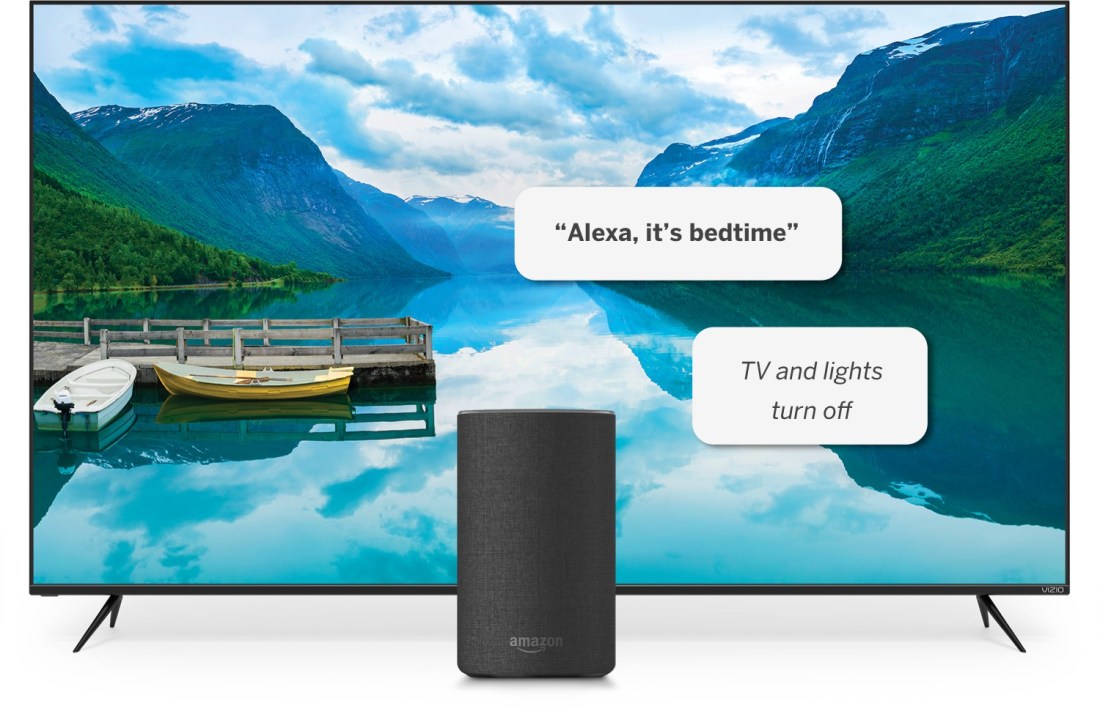
Are you sometimes too lazy or in a rush to choose a meal for dinner? Or you want to listen to some music but you can’t find your phone? Well, Amazon Alexa can help you with these everyday activities and tasks.

Amazon Alexia is an ‘internet of things’ (IoT) and a virtual assistant developed by Amazon. It has voice interaction and the ability to playback music, make to do lists, set alarms, stream podcasts, play audiobooks, order a meal, provide weather, traffic and news updates. Alexa can also control other smart devices using a home automation system.

Some Benefits of Alexa

  1. Voice Shopping – Alexa can help you shop by assisting you to choose the right item for you based your previous orders and offer you a particular brand based on what you’ve purchased previously or suggest an item. Alexa can also cancel orders.
  2. Playback Music – Alexa can stream music for you based on your personal taste, the occasion or mood. In addition, Alexa can play a song even if you forgot the artist or title. Just say:”Alexa, play the song that goes ‘his palms are sweaty, knees weak, arms are heavy’, and it will find Eminem Lose Yourself for you.
  3. Watch TV shows and Movies – Alexa can help you find your favourite tv shows and movies based on your favourites and your history. Alexa can also search for tv shows and movies based on a particular actor or director.
  4. Order a meal – Alexa can order you take-out food from participating restaurants or recommend some options. Alexa in conjunction with Smart Lock can allow Amazon couriers to unlock customer’s front doors and deliver packages inside (Amazon Alexa).

Some Negative Aspects of Alexa

  1. Faulty Voice Assistant – Unlike Amazon Echo, Alexa does not have an always-on microphone that is supposed to record when you want to listen. Instead, as soon as you say ‘wake’ Alexa will start recording, this can be frustrating when Alexa confuses the persons voice with a random noise or Alexa will record audio when the user did not want Alexa to listen.
  2. Privacy Concerns – “Security researchers managed to turn an Echo into a spy device by creating a malicious Alexa Skill that could record unsuspecting users and send the transcription of their conversations to an attacker” (Amazon Alexa)
  3. Hacking – Alexa can be susceptible to someone hacking into your smart device and using its camera and microphone.

So, do you believe products such as Amazon Alexa from the ‘IoT’ will benefit us?

According to a study undertaken by the Pew Research Center, “the growth of the Internet of Things and embedded and wearable devices – will have widespread connectivity and will influence nearly everything, nearly everyone, nearly everywhere” (The Internet of Things Will Thrive by 2025, Pew Research Center).

As a result a number of themes emerged :

1. (+) The Internet of Things and wearable computing will progress significantly between now and 2025.

2. (-) The realities of this data-drenched world raise substantial concerns about privacy and people’s abilities to control their own lives.

3. (+) Information interfaces will advance – especially voice and touch commands.

4. (-) There will be complicated, unintended consequences: ‘We will live in a world where many things won’t work and nobody will know how to fix them.’

5. (-) The unconnected and those who just don’t want to be connected may be disenfranchised.

6. (+) Individuals’ and organizations’ responses to the Internet of Things will recast the relationships people have with each other and with groups of all kinds. The internet welcomes everyone and everything (literally).

(The Internet of Things Will Thrive by 2025, Pew Research Center)

Therefore, my question for all of you is, do any of you use Alexa or know of anybody who does? If so, what was there experience like? And do you think embedded and wearable devices are changing the way society operates?

Are Micro Moments the new way to utilise Mobile Marketing?

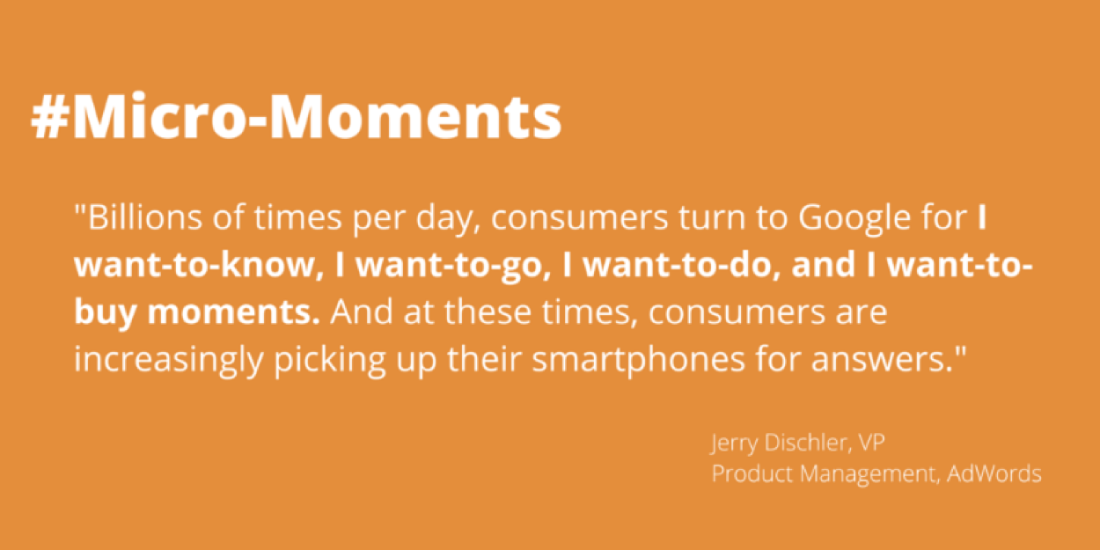
By definition “micro moments is an intent-rich moment when a person turns into a device to act on a need-to know go, do or buy.” (Google, 2016).

There are 4 game-changing moments according to Google which are; I-want-to-know moments, I-want-to-go moments, I-want-to-do moments and I-want-to-buy moments.

It is crucial for businesses to understand micro-moments because this creates insight into buyer behaviour and decision-making in the digital age. For example, Google suggests there are three key factors when it comes to micro-moments. Which are be there, be useful and be accountable.

For example, in 2011 the car brand FIAT successfully used micro moments to build brand awareness for their new “small car” the FIAT 500. The brand utilised mobile search and ensured the brand was engaging. Allowing customers to customise their car on the configuration page as well as pointing customers to the nearest car dealership to there current location. Therefore, it is clear that micro-moments was very beneficial for FIAT’s branding.

Think With Google

So, have you heard of any micro moments that a brand has really utilised?

If so, what brands?

How can the notion of winning be utilised in marketing?

Winning is defined as “gaining, resulting in, or relating to victory in a contest or competition”.

FORTHEWIN

According to Psychologist Kenneth Barish, “winning evokes a feeling of pride; losing evokes a feeling of failure and shame”. This feeling of victory brings enjoyment and achievement, for example games offer us immediate indication of our success in comparison to real-life achievements which may take a lot longer.

So why do certain people love winning games so much?

The feeling of winning games for young children evokes a sense of physical or intellectual dominance (Kenneth Barish, 2012). Which makes young children believe they possess a relatively high level of strength and skill resulting in expression of victory – bragging and gloating.

In a study undertaken by Harvard University, students preferred to have 50% less real income but higher relative income, if this meant defeating their classmates(Solnick & Hemenway, 1998).

As a result, winning creates a ‘social hierarchy and comparison’.

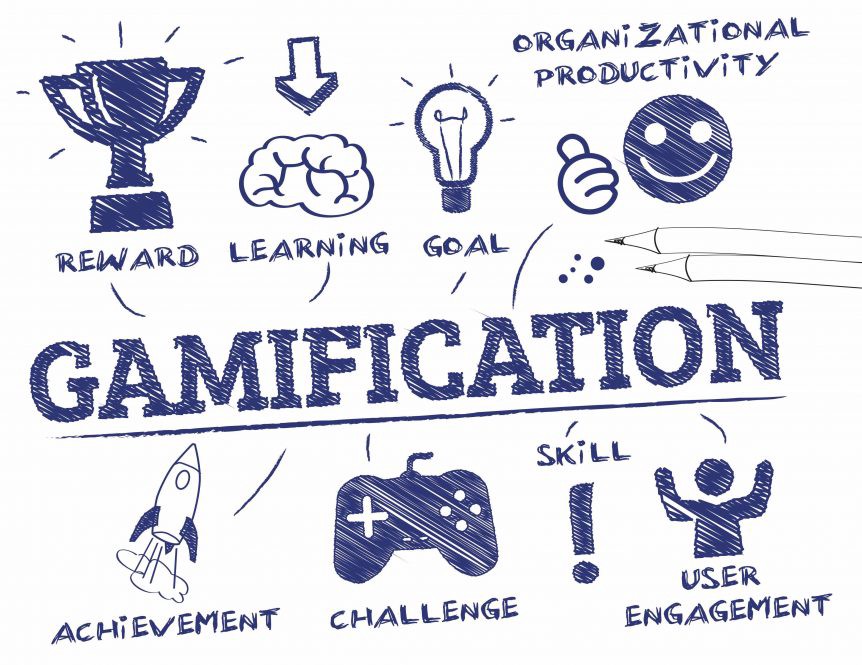
Taking into account societies need to win this can be utilised in marketing by using game mechanics such as gamification. Gamification is a marketing strategy that uses gaming techniques such as competition, ranking lists, scoring systems and incentives to attract consumer in order to build brand loyalty and creating connections with consumers.

The main purpose of gamification is to increase sales & profit, it also helps businesses to collect data, increase engagement and increase the companies brand.

For example, McDonald’s Japan partnered with Pokemon Go in July 2016, this attracted a large number of new consumers to its restaurants. McDonals received 1.5 to 2 million new daily visits across its 3,000 locations in Japan and had an estimated sales increase of 22% and earned an increase in market capitalisation of 9.8% (Jorge Calvo, 2018) .

Therefore, my question for the week is, do you think gamification increases sales & profits and what gamification strategy has gained your attention?

What happened to all the tweeters?

Source: Dahaines

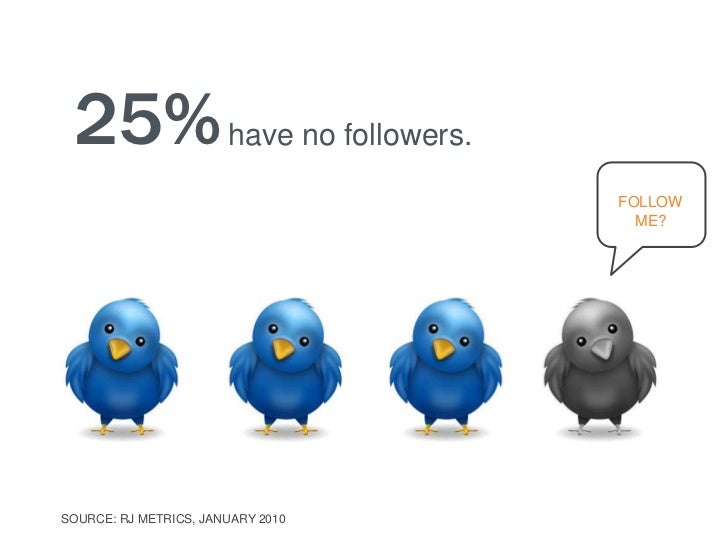
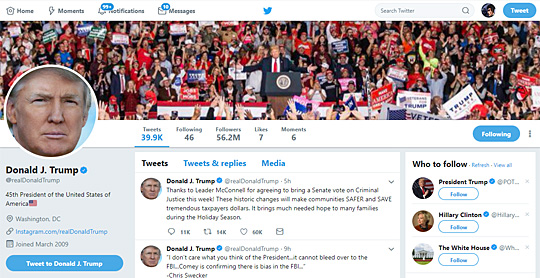
Twitters monthly active user count has plummeted in the last three quarters. Twitter disclosed that during the last few months of 2018 the company lost 5 million monthly users.

Twitter have been taking greater action to reduce bots and spam, this has created a loss in users. According to The Guardian, following the action to delete fake and offensive accounts, Twitter reportedly lose 1 million users.


31% of consumers have stopped using Twitter (Yellow Social Media Report,2018). This is due to lack of interest, boring content and lack of appeal. Consumers would rather use social media channels such as Facebook and Instagram where they can interact with others and share photos and videos. Twitter is also losing consumers to Reddit and Pinterest which are proving to be more attractive to new customers.

According to Washington Post, in 2018 Twitter’s CEO Jack Dorsey disclosed that the social media channel as a “left-leaning” bias, this could potentially lead to twitters downfall as the key principle of any social media platform is to be fair and unbiased. Similarly, Twitter has been accused of promoting disagreement. In 2017, former US President Barack Obama stated that social media should not be a tool which divides the people when it comes to political affiliation (Social Media Revolver). If these issues are not tackled, Twitter could continue to decline and eventually disappear.

On the contrary, Twitter has been increasing in popularity for businesses. In fact, 45% of medium businesses and 60% of large businesses use Twitter as a form of communication (Yellow Social Media Report, 2018).

It can be a great marketing tool for small businesses because it creates a reach and connection with their new audience. It is also a cost-effective way to increase brand awareness through connecting with new users with its promotional ads. According to Twitter, 74% of people who follow small and medium sized businesses follow to get updates on future products, while 47% of people who follow brands are more likely to visit the company’s website.

Therefore, is Twitter declining in popularity or could it be on the rise?

Is Social Media the future of Marketing?

Currently, sales and marketing are the fundamental forces of social media use for all businesses whether small or large. According to Yellow Social Media Report, the main reason businesses use social media is to advertise and promote their business. Social media can also be an avenue for contact and interaction and increase customer base.

Source:

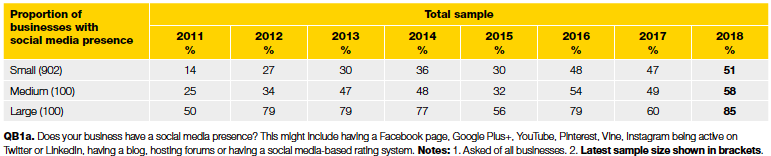
More than half of small (51%) and medium (58%) businesses have a presence on social media, whilst 85% of large businesses have a social media presence. This demonstrates that social media is rapidly evolving and becoming a catalyst of marketing.

Yellow Social Media Report 2018

Social media provides businesses with two-way communication between clients and contacts, it also invites discussion between users, ratings and reviews.

Considering majority of the population have access to social media, it is in a businesses best interest to advertise their company on paid advertise channels such as Facebook, Instagram and LinkedIn.

On the contrary, some would say social media marketing is gradually degenerating, due to demanding privacy policies and safety laws. For example, Facebook has been faced with several policy issues relating to inappropriate posts and videos, demonstrating the rising difficulty with following guidelines.

Although in saying that, according to Sensis 79% of Australians use social media.

Therefore, if 8 out of 10 people now use social media, isn’t it clear to businesses that social media is the future of digital marketing?

Featured

Welcome

Hello my fellow readers, my name is Kiki. I’m a Business Marketing Undergraduate at RMIT University in Melbourne Australia.

I will be writing a weekly blog post about Digital Marketing.

Please do not hesitate to comment on my blog posts and start a discussion.

Enjoy.